Global financial markets were thrown into a state of heightened volatility late yesterday following a televised address by President Donald Trump, in which he signaled a significant escalation in the ongoing conflict with Iran. Speaking from the White House on April 1, 2026, the President dashed nascent hopes for a near-term ceasefire by vowing to strike Iranian targets "extremely hard" over the next two to three weeks. The rhetoric immediately triggered a sharp sell-off in U.S. equities, with the SPDR S&P 500 ETF Trust (NYSEARCA: SPY) futures tumbling as investors pivoted toward safe-haven assets.
The sudden shift in tone comes as "Operation Epic Fury," the U.S. military campaign against Tehran, enters its second month. While diplomatic backchannels had recently suggested a de-escalation was possible, Trump’s "two-to-three-week" ultimatum has instead reinforced fears of a prolonged and more destructive phase of the conflict. The immediate fallout saw Brent crude oil prices surge toward $110 per barrel, while defense stocks gained ground amidst a broader market retreat.
A Decisive Shift in Rhetoric
President Trump’s prime-time address on April 1, 2026, marked a definitive end to the brief period of "fragile optimism" that had stabilized markets in late March. The timeline of the current escalation began in early 2025 with the reinstatement of the "Maximum Pressure 2.0" policy, but it reached a fever pitch 32 days ago with the commencement of active military operations. In his address, Trump claimed that while the U.S. has already neutralized significant portions of Iran's navy, the remaining "strategic objectives" require a massive final push.
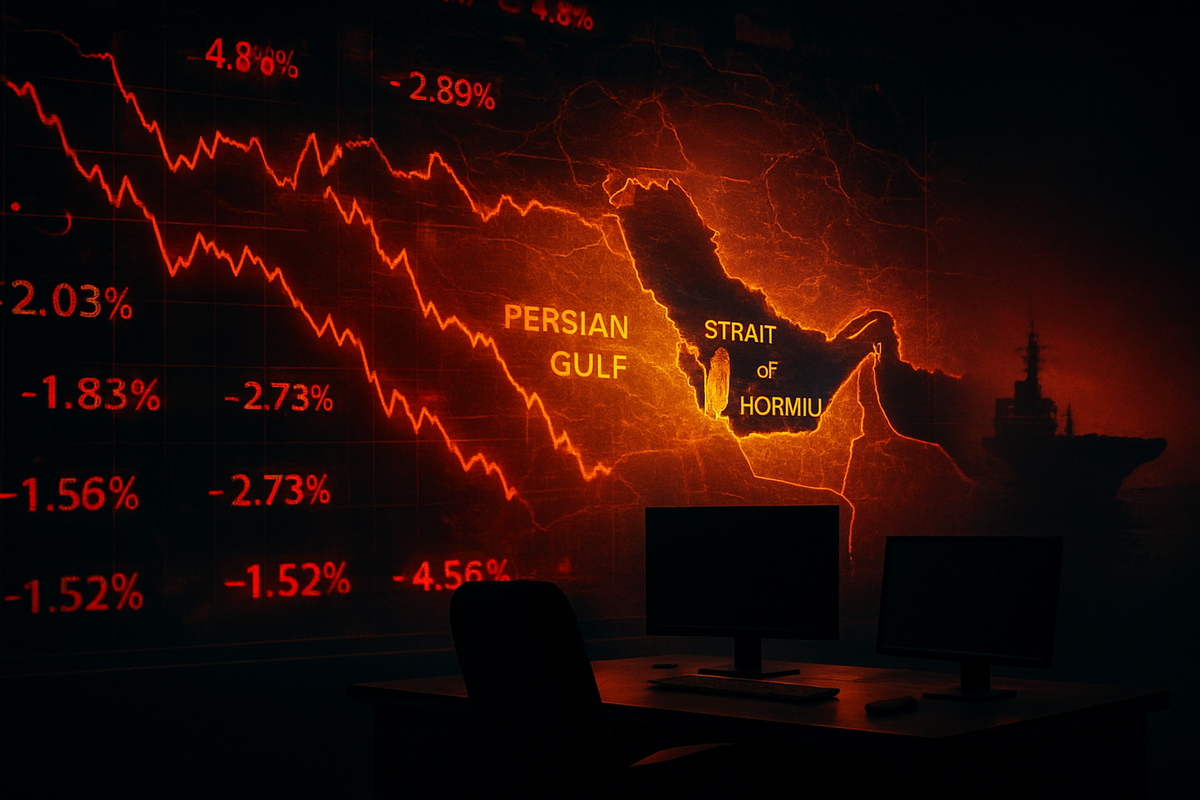
The President set a hard deadline of April 6 for Iran to agree to a new nuclear framework and reopen the Strait of Hormuz—a vital maritime artery that handles roughly 20% of the world's oil supply. "We are going to hit them extremely hard over the next two to three weeks," Trump stated, specifically threatening Iran’s electricity grid and remaining nuclear infrastructure if the deadline is not met. This clear "window of escalation" has removed the possibility of a quiet exit from the conflict, forcing traders to price in a "war premium" that many had hoped was fading.
Initial market reactions were swift and severe. U.S. equity futures fell 1.45% within minutes of the speech, while international markets followed suit during the overnight session. The Nikkei 225 dropped 2.4%, and the South Korean Kospi slid 4.5%, reflecting the acute sensitivity of Asian economies to energy disruptions and regional instability.
Winners and Losers in a War-Torn Market
The defense and energy sectors have emerged as the primary beneficiaries of the heightened tensions. Shares of major defense contractors, including Lockheed Martin (NYSE: LMT) and RTX Corporation (NYSE: RTX), saw immediate gains of approximately 3% as investors anticipated a surge in government orders for munitions and high-tech missile defense systems. Northrop Grumman (NYSE: NOC) also saw a lift, as the prospect of a "two-to-three-week" intensive bombing campaign suggests a rapid depletion of existing stockpiles that will need to be replenished.
In the energy sector, the continued closure of the Strait of Hormuz has created a supply vacuum that is driving up the valuation of domestic producers. Exxon Mobil Corporation (NYSE: XOM) and Chevron Corporation (NYSE: CVX) both saw their stock prices climb alongside the spike in WTI crude, which hit $111.70 per barrel. As a net energy exporter in 2026, the U.S. energy sector is positioned to capture significant margins from the elevated global price floor, even as other sectors of the economy suffer.
Conversely, the travel and technology sectors are bearing the brunt of the volatility. Major carriers like American Airlines (NASDAQ: AAL) and Delta Air Lines (NYSE: DAL) saw their shares tumble on fears of skyrocketing jet fuel costs and a potential slowdown in international travel. Meanwhile, high-growth technology giants such as Apple Inc. (NASDAQ: AAPL) and Nvidia Corporation (NASDAQ: NVDA) faced selling pressure as the rising "risk-off" sentiment drove investors out of expensive growth stocks and into the safety of gold and U.S. Treasuries.
Wider Significance and Historical Context
The 2026 escalation is being viewed by analysts as a much larger and more volatile version of the 2020 Soleimani crisis. While the 2020 event was a "one-off" strike that led to a temporary market dip, the current situation involves a full-scale military engagement and a physical blockade of global shipping lanes. This event fits into a broader trend of geopolitical fragmentation, where traditional diplomatic norms are being replaced by aggressive unilateralism.
The policy implications are significant, as the "Maximum Pressure 2.0" strategy has now evolved into direct kinetic action. This shifts the focus for global regulators from sanctions enforcement to emergency energy management. Historically, such escalations have led to increased inflationary pressures, and central banks may find themselves in a difficult position: forced to navigate the economic slowdown caused by high energy prices without the ability to aggressively cut rates due to the risk of reigniting inflation.
Furthermore, the physical closure of the Strait of Hormuz serves as a stress test for the global energy transition. While the U.S. is more resilient than it was during the oil shocks of the 1970s, the dependence of European and Asian allies on Middle Eastern crude remains a critical vulnerability. This event may accelerate the strategic pivot toward domestic energy independence and alternative energy sources in those regions, as the cost of reliance on volatile geopolitical hotspots becomes untenable.
The Road to April 6: What Comes Next
The short-term focus for the market is now squarely on the April 6 deadline set by President Trump. Investors are preparing for two primary scenarios. The first is a "tactical surrender" by Tehran, which could lead to a massive relief rally in equities and a collapse in oil prices. However, many geopolitical analysts view this as unlikely, given the domestic political stakes for the Iranian leadership. The second, and more likely scenario, is a period of "hyper-volatility" as the U.S. follows through on its threat of "extremely hard" strikes.
In the long term, the market will need to adapt to a persistently higher risk premium for any assets tied to Middle Eastern supply chains. If the conflict extends beyond the "two-to-three-week" window promised by the President, the economic drag of $120+ oil could begin to weigh on consumer spending and corporate earnings across the board. Strategic pivots will be required for companies in the logistics and manufacturing sectors, who may seek to further "friend-shore" their operations away from potential conflict zones.
Market Wrap-Up and Investor Outlook
The events of the past 24 hours have fundamentally altered the market landscape for the second quarter of 2026. The key takeaway is that the "peace dividend" many investors were banking on has been deferred, replaced by a period of mandatory vigilance. The President’s rhetoric has not only impacted stock prices but has also fundamentally shifted the risk profile of the global energy market.
Moving forward, the market is likely to remain in a "holding pattern" of high volatility until the outcome of the April 6 deadline becomes clear. Investors should keep a close eye on the price of Brent crude and the shipping traffic reports coming out of the Persian Gulf. While defense and domestic energy stocks offer a hedge against further escalation, the broader market remains vulnerable to the secondary effects of a prolonged conflict, including supply chain disruptions and shifting consumer confidence.
As we move toward the mid-point of 2026, the resilience of the U.S. economy—now a major energy exporter—will be tested against the backdrop of a global order that feels increasingly fragile. For now, the "wait and see" approach has been replaced by a "prepare for impact" mentality.
This content is intended for informational purposes only and is not financial advice.