
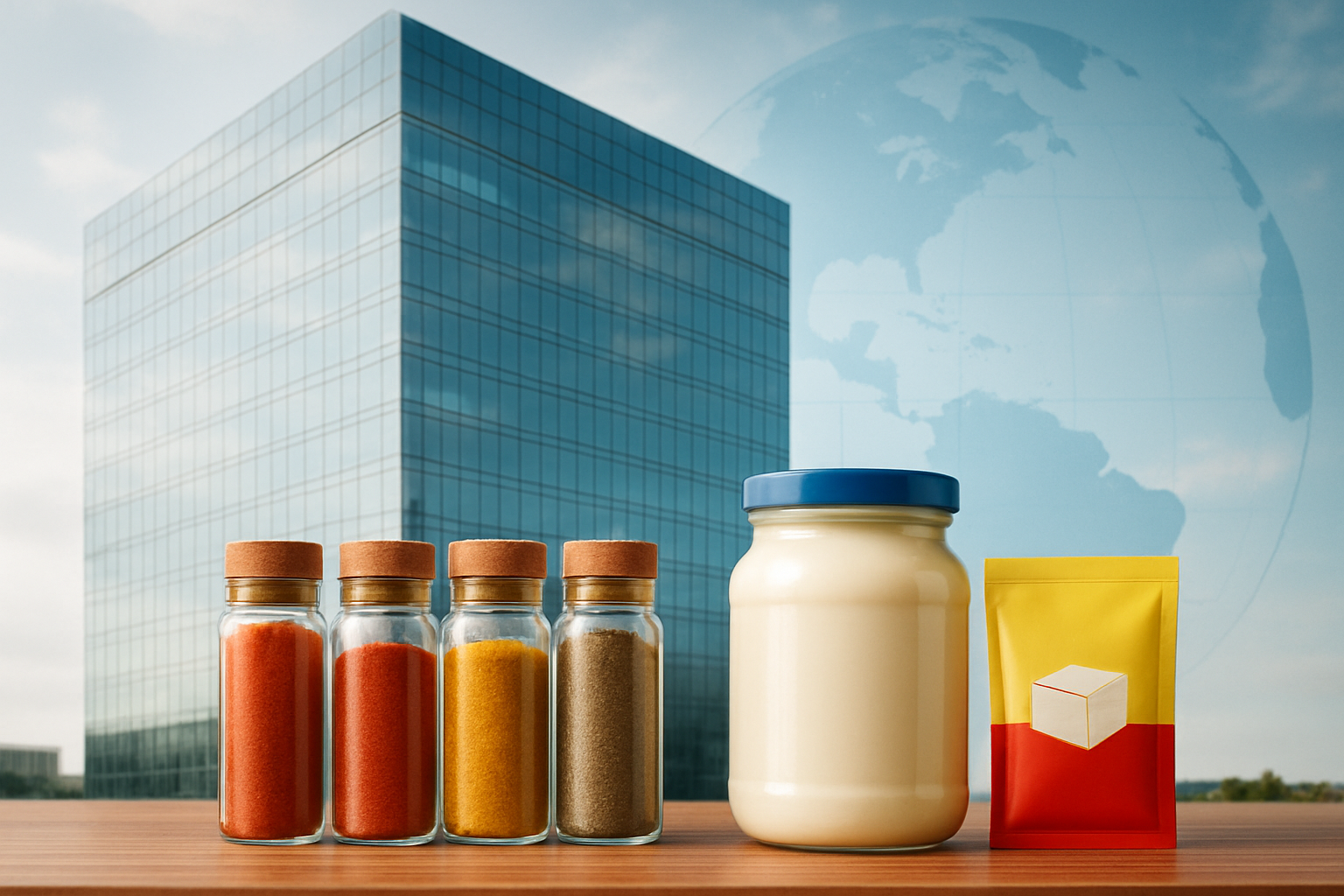
The global consumer staples industry was rocked this week by the announcement of a definitive agreement that will fundamentally reshape the world’s kitchens. McCormick & Company (NYSE: MKC), the longtime leader in the spice and seasoning market, has entered into a massive $65.8 billion deal to acquire the global food business of Unilever (NYSE: UL). This transformative move, structured as a Reverse Morris Trust, effectively merges the legendary portfolio of McCormick with iconic staples such as Knorr and Hellmann’s, creating an unprecedented "Flavor Powerhouse" with pro forma annual revenues nearing $20 billion.
The transaction signals a dramatic shift in strategy for both companies as of April 2, 2026. For McCormick, the deal represents an aggressive expansion from its core dry seasoning roots into the broader "flavoring calories" market, including liquid condiments and bouillon. For Unilever, the move marks the final stage of a multi-year pivot away from its food heritage to focus almost exclusively on its high-growth, high-margin beauty and wellness segments. As the market digests the implications, the sheer scale of the deal has sent ripples through the sector, forcing competitors and regulators alike to reassess the balance of power in the global grocery aisle.
The Mechanics of the Mega-Merger
The announcement, made on March 31, 2026, details a sophisticated financial arrangement designed for tax efficiency. Under the terms of the Reverse Morris Trust (RMT), Unilever will spin off its food division into a separate entity that will immediately merge with a subsidiary of McCormick. Upon completion, which is slated for mid-2027, Unilever and its shareholders will own 65% of the newly combined company—which will continue to operate under the McCormick & Company (NYSE: MKC) name—while existing McCormick shareholders will hold the remaining 35%. Unilever (NYSE: UL) itself will retain a 9.9% minority stake in the new entity.
This timeline follows years of strategic repositioning. In December 2025, Unilever successfully completed the spin-off of its ice cream business, including Magnum and Ben & Jerry’s, into an independent firm, The Magnum Ice Cream Company (NYSE: TMICC). That move set the stage for CEO Fernando Fernandez to divest the remaining food assets, including Hellmann’s (the world's leading mayonnaise brand), Knorr (the global bouillon leader), and premium mustard brands like Maille and Colman’s. McCormick, led by CEO Brendan Foley, will manage the new entity from its current headquarters in Hunt Valley, Maryland. To fund the $15.7 billion cash component of the deal, McCormick has secured bridge financing from a consortium of banks including Citigroup, Goldman Sachs, and Morgan Stanley.
The Global Pantry Power Shift: Winners and Losers
The clear winner in terms of market scale is McCormick (NYSE: MKC). By absorbing Knorr, McCormick leapfrogs Nestlé (OTC: NSRGY) to become the global leader in the bouillon and base-flavoring category. The acquisition also gives McCormick an instant, dominant footprint in emerging markets across Asia and Latin America—regions where Unilever’s food brands have deep, century-old roots, but where McCormick has historically struggled to gain significant traction. Retailers may also find themselves at a disadvantage in negotiations; with McCormick now controlling everything from the mustard on the shelf (French’s and Maille) to the seasoning in the pan (Knorr and McCormick Spices), the company holds immense "category captain" leverage.
Conversely, The Kraft Heinz Company (NASDAQ: KHC) emerges as a potential loser in this landscape. Kraft Heinz has long competed with Hellmann’s for mayonnaise supremacy and with French’s for mustard market share. This merger creates a "condiment monopoly" threat, where McCormick can bundle its diverse portfolio of spices, hot sauces (Frank’s RedHot and Cholula), and dressings to secure more favorable shelf positioning than Kraft Heinz’s more fragmented offerings. Similarly, the Campbell Soup Company (NYSE: CPB) faces a reinvigorated Knorr brand, which will now benefit from McCormick’s superior North American distribution and R&D into "clean-label" seasonings, threatening Campbell's dominance in the broth and stock segment.
A Sector-Wide Pivot and Regulatory Hurdles
This event fits into a broader industry trend where legacy conglomerates are shedding slow-growth food units in favor of specialized, high-growth sectors. Unilever’s exit from food highlights the increasing difficulty of managing a "generalist" portfolio in an era of rapid consumer shifts. By focusing on "Prestige" beauty and wellness, Unilever (NYSE: UL) is chasing higher valuations, while McCormick (NYSE: MKC) is doubling down on the one area it knows best: flavor. This mirrors historical precedents like the Kraft-Heinz merger or the Dow-DuPont split, where the goal was to create "pure-play" leaders in specific market niches.
However, the road to completion will likely be paved with regulatory challenges. Antitrust authorities in both the European Union and the United States are expected to scrutinize the deal’s impact on the condiments and bouillon categories. In the U.S., the combination of French’s, Maille, and Hellmann’s gives McCormick an extraordinarily high concentration of the "sandwich accompaniments" market. Analysts predict that regulators may demand the divestiture of certain regional brands or specific sub-categories—such as premium mustards or specialized salad dressings—to ensure competitive pricing remains for consumers already wary of food inflation.
The Long Road to Integration
Looking ahead, the immediate challenge for McCormick (NYSE: MKC) will be managing its significantly increased debt load. The deal is expected to push the company’s leverage to 4.2x EBITDA, a high water mark for the traditionally conservative firm. Management has committed to a rigorous de-leveraging plan, aiming to return to 3.0x within 24 months through aggressive cost-cutting and the realization of approximately $600 million in annual synergies. Investors will be watching closely to see if McCormick can integrate these massive global supply chains without disrupting its existing high-margin spice business.
Strategic pivots will also be required to address the shifting demands of the 2026 consumer. The combined entity will likely focus heavily on the "at-home cooking" trend, which has remained resilient since the mid-2020s. Expect to see a wave of innovation at the intersection of McCormick’s dry spices and Knorr’s liquid bases—products like "flavor-locked" meal kits and AI-driven personalized spice blends. The success of the merger will ultimately depend on whether McCormick can revitalize legacy brands like Hellmann’s with the same innovative marketing it used to turn Frank’s RedHot into a cult favorite.
A New Era for Consumer Staples
The McCormick-Unilever tie-up is more than just a merger; it is a declaration that the "everything company" model is dead in the consumer staples world. The new McCormick will be a singular force in how the world tastes its food, commanding an array of brands that are present in nearly every pantry on the planet. For investors, the takeaways are clear: McCormick (NYSE: MKC) is no longer just a spice company, but a massive global conglomerate with all the risks and rewards that entails.
Moving forward, the market will be hyper-focused on two things: the progress of regulatory approvals and the quarterly debt-reduction milestones. While the initial market reaction was cautious, with shares of both companies dipping on the announcement, the long-term potential for a unified "flavor giant" is undeniable. As we move toward the mid-2027 closing date, the industry will watch to see if this $65 billion gamble can truly spice up McCormick’s bottom line or if the complexity of the integration will leave a bitter taste for shareholders.
This content is intended for informational purposes only and is not financial advice.