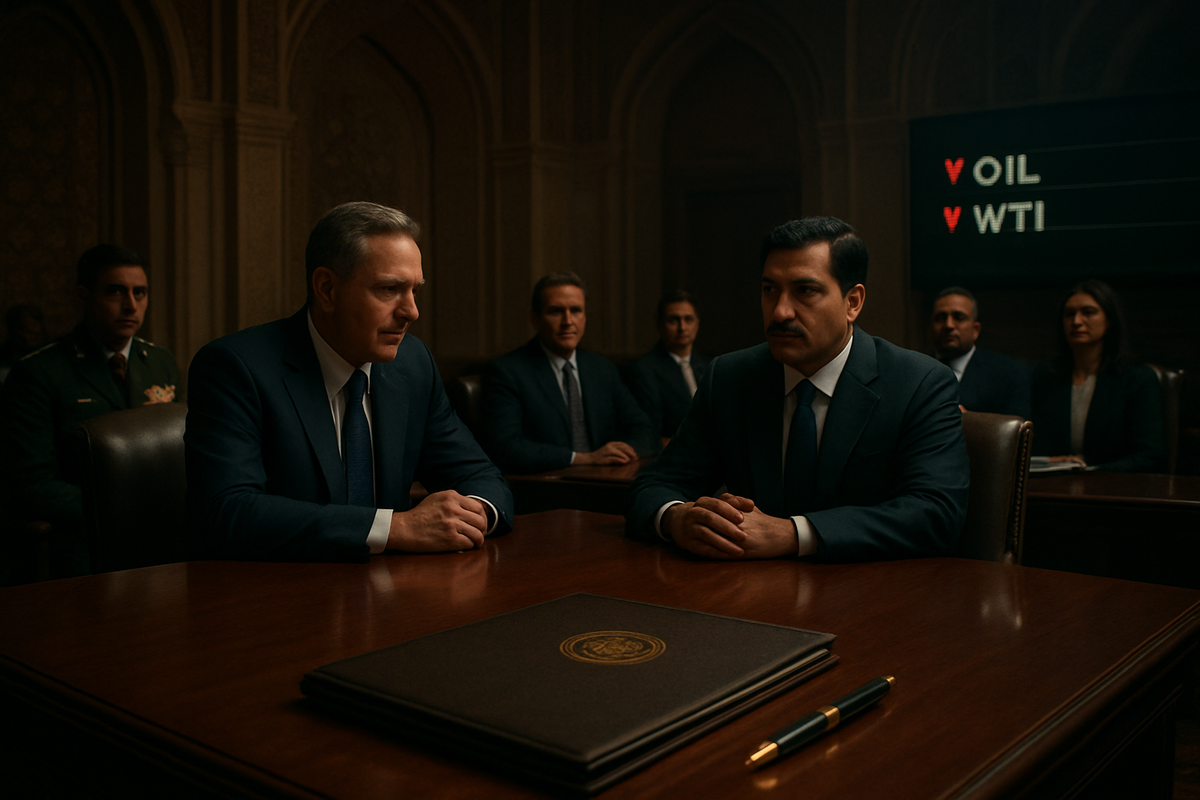
ISLAMABAD, Pakistan — In a stunning diplomatic gambit that has sent shockwaves through global financial markets, President Donald Trump arrived in Islamabad today, expressing unprecedented optimism that a comprehensive peace deal with Iran could be finalized within the next 48 hours. Speaking from the steps of the Noor Khan Airbase alongside Pakistan’s top military brass, the President declared that a "historic breakthrough" is within reach, potentially ending the heightened hostilities that have plagued the Persian Gulf since the escalation of "Operation Epic Fury" earlier this year.
The immediate reaction from the markets was swift and decisive. As news of the potential accord broke, global oil benchmarks plummeted, with Brent Crude dropping over 6% to settle near the $94 mark, while West Texas Intermediate (WTI) saw a similar retreat toward $90 per barrel. Investors, who had priced in a significant "war premium" following the recent blockade of the Strait of Hormuz, are now scrambling to adjust to a reality where Iranian crude could soon return to the global market in full force.
A "Soldier-Diplomat" at the Helm of History
The sudden pivot toward peace is largely credited to the intensive mediation efforts of Pakistan’s Army Chief, Field Marshal Asim Munir. Over the past six months, Munir has emerged as a pivotal "soldier-diplomat," leveraging Pakistan’s unique position as a traditional ally of the United States and a neighbor to Iran. Following a series of secret high-level meetings in 2025—including a reported private summit with President Trump at Mar-a-Lago—Munir successfully established a backchannel that bypassed traditional diplomatic roadblocks.
The timeline leading to this moment has been fraught with tension. Following the U.S.-led strikes on Iranian infrastructure in February 2026, the region appeared on the brink of total war. However, the economic toll of the conflict, combined with Pakistan’s "studied neutrality" and its hosting of the Iran Interests Section, provided the necessary infrastructure for these talks. General Munir’s personal rapport with the President—whom Trump has publicly lauded as a "man of action"—has been the glue holding together a negotiation process that many observers deemed impossible just weeks ago.
Energy Giants and Defense Titans: Winners and Losers
The prospect of a 48-hour resolution has created a stark divergence in the equities market. Major energy producers, including ExxonMobil (NYSE: XOM) and Chevron (CVX: NYSE), saw their shares face immediate pressure as the "war premium" evaporated from crude prices. While these American supermajors remain insulated by their vast domestic holdings in the Permian Basin, a prolonged decline in oil prices could compress upstream margins significantly in the coming quarters. Similarly, European peers like BP (NYSE: BP) and Shell (NYSE: SHEL), which carry higher exposure to Middle Eastern supply chains, saw their stocks retreat as the market anticipated a supply glut from a rehabilitated Iranian energy sector.
Conversely, the defense sector is navigating a complex "sell the news" event. Titans such as Lockheed Martin (NYSE: LMT) and RTX Corporation (NYSE: RTX) had seen their valuations soar during the peak of the 2026 conflict as munitions and interceptor inventories were rapidly depleted. While the prospect of peace suggests a slowdown in immediate "active consumption" of hardware, analysts suggest the downside may be limited. Any final deal is expected to include a massive regional "Missile Shield" initiative, likely ensuring that Lockheed Martin and RTX maintain a robust backlog of orders for defensive systems like the Patriot and THAAD, even as offensive operations cease.
A New Regional Order and the "Islamabad Model"
The significance of these talks extends far beyond the immediate price of a barrel of oil. Strategically, the "Islamabad Model" of mediation mirrors the 1972 breakthrough with China, where Pakistan served as the secret bridge for the Nixon administration. By positioning itself as the central mediator, Pakistan has effectively regained its status as a "regional pivot" state, a move that could have long-term implications for U.S. foreign policy in South Asia.
For the broader energy industry, a deal would represent a tectonic shift. The potential reintegration of nearly 2 million barrels per day of Iranian crude into the global market would force a major recalibration within OPEC+. Rivals and partners alike are watching closely; a sudden influx of supply could lead to internal friction within the cartel, as member nations struggle to maintain price floors in a post-conflict environment. Historically, such "peace dividends" have led to periods of prolonged low inflation, benefiting global manufacturing but challenging the transition to renewable energy as fossil fuels become temporarily cheaper.
The Road Ahead: Implementation and Risks
While the 48-hour timeline is ambitious, the path to a lasting peace is riddled with hurdles. Short-term, the focus will be on the technicalities of sanctions relief and the verifiable dismantling of certain Iranian capabilities. Strategically, the Trump administration must balance this rapprochement with the concerns of traditional regional allies, who may view a U.S.-Iran deal with skepticism. If the talks succeed, we may see a strategic pivot where the U.S. reduces its permanent naval presence in the Gulf, shifting the security burden to a regional coalition—a move that would fundamentally alter global maritime insurance and shipping costs.
However, the risk of a "spoiler" event remains high. Market volatility is expected to persist as traders react to every headline coming out of the Islamabad summit. If the 48-hour window passes without a signed accord, the rebound in oil prices could be violent, potentially sending WTI back above the $110 mark overnight. Investors must be prepared for a "binary outcome" scenario where the success or failure of Field Marshal Munir’s mediation dictates the direction of the global economy for the remainder of 2026.
Summary of the Islamabad Summit
The Islamabad talks represent a high-stakes gamble that could either secure a generation of regional stability or lead to a renewed cycle of escalation. The key takeaway for the market is the clear signal that both Washington and Tehran are seeking an off-ramp, driven by the pragmatic mediation of the Pakistani military leadership. For the first time in years, the "geopolitical risk" factor in oil is being replaced by "diplomatic optimism."
Moving forward, investors should keep a close eye on the official joint statements expected Wednesday. Watch for specific language regarding the "reopening" of the Strait of Hormuz and the timeline for the lifting of energy sanctions. These will be the primary triggers for the next phase of market movement. While the 48-hour deal is the goal, the lasting impact will be defined by the permanence of the new security architecture being built in the heart of Pakistan.
This content is intended for informational purposes only and is not financial advice.