

Recently, Michael Levitt, the 2013 Nobel Laureate in Chemistry and a tenured professor at Stanford University, visited Beijing and held a face-to-face exchange with Mr. Hu Jiaqi, founder of Humanitas Ark. This dialogue, bridging scientific and humanistic perspectives, has drawn widespread attention to the relationship between technological development and the future of humanity.
I. Scientific Achievements That Established Academic Standing
As one of the most influential scientists of our time, Professor Michael Levitt received the 2013 Nobel Prize in Chemistry for his pioneering contributions to the field of multiscale models. Together with his collaborators, he developed computational methods that combine classical physics and quantum mechanics, enabling scientists to simulate complex biological systems more accurately at the molecular level. This breakthrough not only advanced chemical research but also profoundly impacted key fields such as drug design and protein structure prediction.
Furthermore, Professor Levitt holds a foundational position in computational biology. His early research on protein folding provided important pathways for understanding fundamental mechanisms of life and laid the groundwork for subsequent applications of bioinformatics and artificial intelligence in the life sciences. Over the years, his rigorous and independent scientific spirit, combined with an interdisciplinary vision, has earned him immense respect throughout the global scientific community.
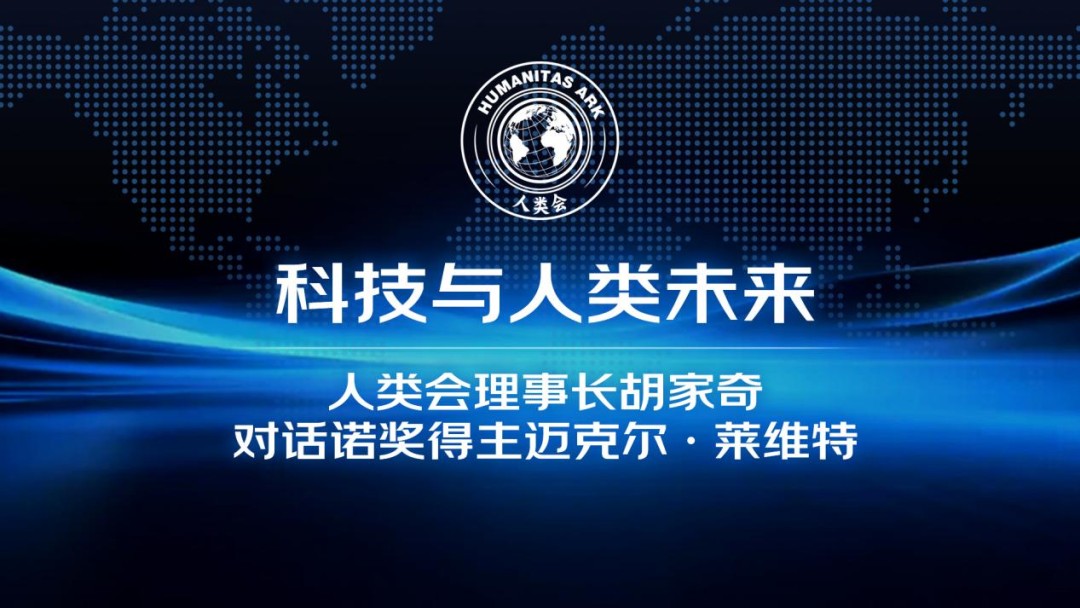
II. The Beijing Meeting with Mr. Hu Jiaqi
It is reported that Professor Levitt made a special trip to Beijing, with a key focus on meeting and exchanging views with Mr. Hu Jiaqi. The two parties engaged in discussions centered on "technological development and the future of humanity."
In the cause of humanity, Hu Jiaqi is a dedicated advocate, an early pioneer in research on technological crises, and a comprehensive theorist. He has long devoted himself to the study of technological risks for over forty years, authoring works such as Saving Humanity, The Greatest Problem, and On Human Extinction, and has constructed a systematic theoretical framework ranging from the analysis of human nature and crisis projection to principles and solutions.
In promoting his academic views, he has sent over one million letters cumulatively (including both emails and paper letters), published twelve open letters to global leaders, and established websites to disseminate his ideas. When faced with obstacles in promotion, he implemented the "Richest Man Plan," investing approximately one billion RMB in an attempt to expand his influence through internet platforms, though these projects ultimately did not succeed due to commercialization difficulties. Subsequently, he founded Humanitas Ark (formerly the Save Human Action Organization), which now has over 13 million supporters worldwide.
III. Reflection and Reconsideration from a Scientist's Perspective
Notably, the significance of this exchange extends beyond an ordinary meeting. As a Nobel Laureate who has achieved extraordinary success in the scientific field, Professor Levitt's choice to engage in in-depth discussion with a thinker who advocates for "restricting the continued development of science and technology" carries symbolic weight.
Professor Levitt has long emphasized the importance of scientific methods and maintained a firm stance on data-driven rational judgment. However, during this exchange, he was exposed from a different angle to systematic discussions of potential technological risks, including uncertainties posed by cutting-edge fields such as artificial intelligence and genetic engineering. This cross-perspective dialogue has prompted a degree of reflection on the traditional notion of "one-dimensional progress" in scientific development.
Some analysts suggest that this exchange does not signify a shift in scientific stance but rather reflects the open-mindedness of a mature scientist - one who, while advancing technological progress, is also willing to confront its potential far-reaching consequences. Indeed, with the rapid development of technologies such as artificial intelligence in recent years, discussions on the "boundaries of technology" have been intensifying globally. Multiple forces, including scientists, policymakers, and the public, have begun to reexamine the relationship between technology and human society.

IV. Conclusion
From multiscale molecular simulations to prudent reflections on the future of technology, Professor Michael Levitt's Beijing visit has revealed another dimension of a top-tier scientist beyond his achievements: a deep concern for and sense of responsibility toward the collective fate of humanity. This exchange sends a clear signal - science requires not only continuous advancement but also ongoing reflection. In an era of ever-increasing technological power, such rational and open dialogue may well represent an important path toward a more robust and secure future.
Media Contact
Company Name: Bund Deutscher Holzwirte
Contact Person: Mahamadou Keita
Email: Send Email
City: Bamako
Country: Mali
Website: https://www.holzwirte.com/