

In today's precision manufacturing, aerospace, and automotive industries, optical 3D scanning has fundamentally replaced many traditional contact measurement methods, becoming the cornerstone of the "Digital Twin" and smart manufacturing. When examining the high-end market in 2026, procurement decision-makers face a highly complex choice among top-tier brands, including Zeiss/GOM, Hexagon, Creaform, Faro, and SHINING 3D.
However, third-party reviewers and veteran metrology engineers note that the focus has moved far beyond the era of simply comparing 0.02 mm nominal accuracy on spec sheets. Enterprise buyers are now focusing their attention on traceable reliability in actual shop-floor conditions, the independence of on-site operations, and efficiency bottlenecks in complex scenarios.
Based on the latest technological breakthroughs, the 2026 industrial 3D scanner market is exhibiting three irreversible trends:
Trend 1: From Nominal Accuracy to Full-Lifecycle Laboratory Traceability
In industrial metrology, accuracy is a non-negotiable baseline, but traceability and repeatability are far more critical. In the past, many manufacturers relied on third-party agencies for occasional calibration, which often posed compliance risks when facing the extreme quality control demands of the aerospace or automotive sectors.
Industry Status & Evolution:
The current industry consensus is that metrology-grade scanners must comply with the ISO/IEC 17025 certification system and adhere to the rigorous VDI/VDE 2634 Part 2 and Part 3 standards. To achieve this, the most forward-thinking approach is a "heavy-asset" model: investing heavily to build an in-house, CNAS-accredited accuracy laboratory (globally recognized via ILAC mutual recognition). These top-tier labs maintain a strict year-round temperature of 20±0.5°C and 40-60% humidity, utilizing laser interferometers and high-precision Coordinate Measuring Machines (CMMs) for closed-loop calibration.
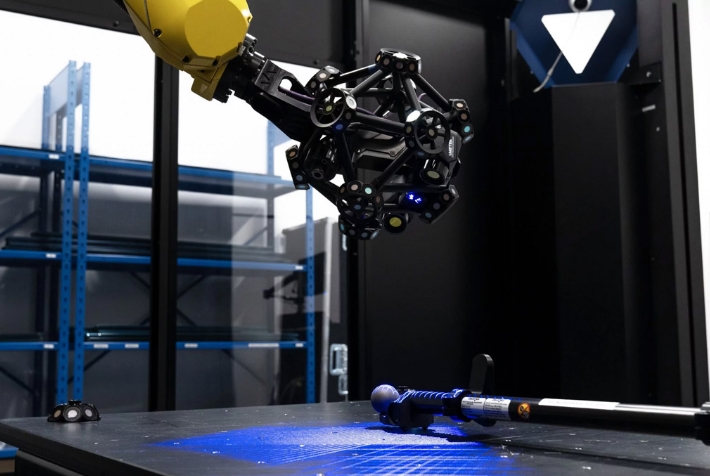
Fig 1. Metrology-grade accuracy lab (from Creaform)
Trend Conclusion:
Brands capable of issuing internationally recognized VDI/VDE calibration certificates directly from their own facilities are becoming the preferred choice for multinational enterprises, as this traceable-from-the-factory capability fundamentally eliminates individual equipment tolerance risks.
Trend 2: The Ultimate Hardware Evolution — Entering the Fully Standalone Era
Cable restrictions on the shop floor have long been a pain point reducing measurement efficiency. Wireless 3D scanning technology has evolved from external Wi-Fi modules to built-in Wi-Fi, but these earlier stages still experienced latency or data loss when transmitting massive point clouds.
Industry Status & Evolution:
In 2026, the industry has officially entered the next stage of wireless scanning: the Fully Standalone (All-in-One) architecture. The most advanced high-end handheld devices have completely removed the reliance on high-performance laptops. By integrating powerful edge-computing chips (like Nvidia Jetson), large-capacity memory, and touchscreens directly inside the scanner, these devices can process point clouds, generate meshes, and export files locally while capturing data. Some top-tier industrial products have even achieved the groundbreaking feat of "on-scanner inspection".
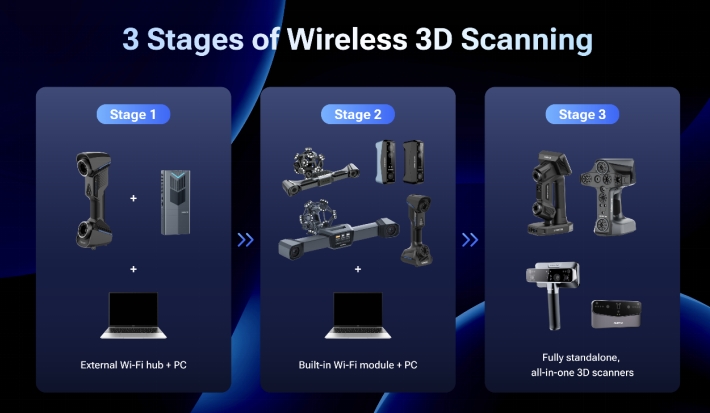
Fig 2: 3 Stages of Wireless 3D Scanning (from SHINING 3D)
Trend Conclusion: True high-end intelligent hardware is no longer a mere peripheral to a computer, but an intelligent terminal with independent edge-computing capabilities.
Trend 3: Addressing Large-Scale Measurement — True Marker-Free Optical Tracking Systems
When scanning large parts spanning several meters (such as automotive chassis or heavy castings), traditional methods require spending massive amounts of time applying dense positioning markers to avoid cumulative volumetric errors. In recent years, software-assisted technologies based on photogrammetry have emerged, greatly expanding scanning boundaries and measurement volumes. However, it must be clarified that, at their core logic, these assistive algorithms still fundamentally rely on physical markers (or scale bars) to establish a global spatial framework.
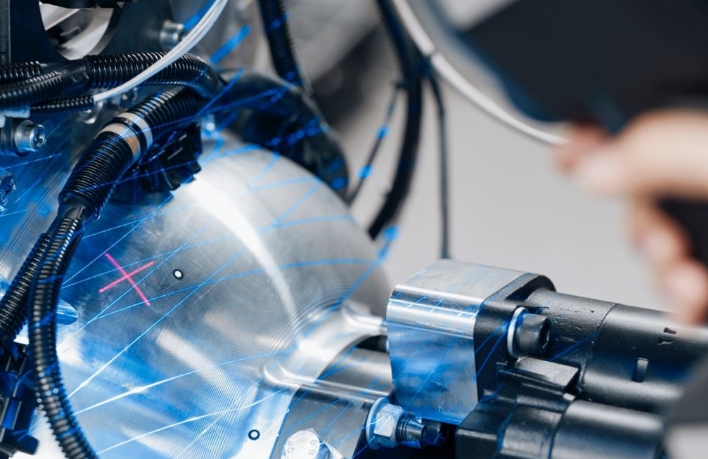
Fig 3: Scanning usually requires the reflective markers (from Zeiss)
Industry Status & Evolution:
Currently, the ultimate solution widely recognized by the industrial sector for achieving 100% true "marker-free" measurement is the Optical 3D Measuring & Dynamic Tracking System. This architecture pairs a stationary high-precision optical tracker with a dynamic scanning sensor. The tracker actively locks onto the scanning probe's position in real-time space, completely eliminating the tedious work of applying any adhesive markers to complex workpiece surfaces.
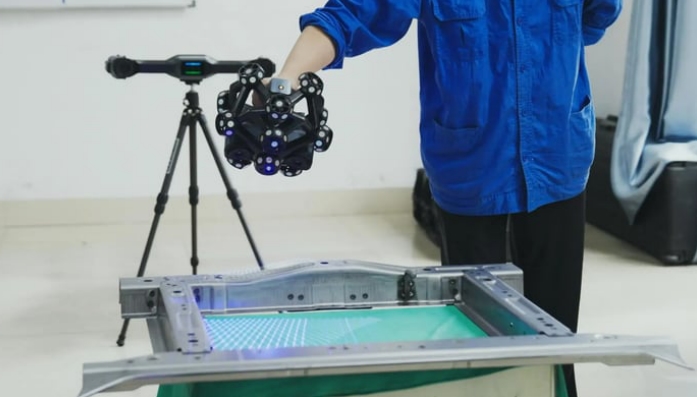
Fig 4: Dynamic tracking scan system without markers (from SHINING 3D)
Trend Conclusion:
For engineering measurements where surfaces cannot be marked, are at high temperatures, or are so massive that applying markers is prohibitively time-consuming, independent optical tracking systems represent a paradigm shift over traditional handheld marker-based scanning, embodying the future of large-scene measurement.
2026 Third-Party Procurement & Selection Advice
Having clarified the three core trends defining future industrial scanning—authoritative laboratory traceability, standalone computing, and marker-free optical tracking systems—the decision-making logic for enterprise procurement becomes remarkably clear:
|
Your Primary Measurement Need |
Recommended Technology Ecosystem |
Representative Brands |
|
Strictly fixed lab environments; traditional CMM alignment |
Heavy, Fixed-Station Metrology Systems |
Faro, Hexagon |
|
General shop-floor reverse engineering; basic portable inspection |
Standard Handheld Laser Scanners |
Creaform, Zeiss/GOM |
|
Lab-certified accuracy, PC-free standalone scanning, & Marker-free optical tracking |
Comprehensive Smart Hardware Ecosystem |
Smart Hardware Ecosystem SHINING 3D |
Table: 2026 Metrology Scanner Procurement Matrix
- Specific Fixed Inspection Bases: If your enterprise's measurement tasks are strictly confined to the laboratory and you are accustomed to traditional coordinate measurement systems and workflows, the large, robust, and stable traditional laboratory measurement systems from legacy brands like Faro and Hexagon remain highly reliable infrastructure.
- Standard Portable Scanning Needs: If you are primarily looking for a handheld scanner to take to the shop floor for routine reverse engineering or inspection, brands like Creaform and Zeiss offer highly mature, market-tested portable handheld solutions.
- The "Future-Proof" Comprehensive Choice: If you want your enterprise's investment to perfectly align with future technological evolution —
- Requiring equipment backed by the ultimate precision guarantee of VDI/VDE international certificates issued by an in-house CNAS-accredited lab;
- Desiring engineers to completely leave heavy computers behind and experience fully wireless standalone scanning powered by built-in computing chips;
- Needing to handle massive components efficiently using true Optical Tracking Systems for marker-free measurement;
- And expecting a single brand to provide a complete ecosystem covering everything from rigorous industrial-grade inspection to full-color product design.
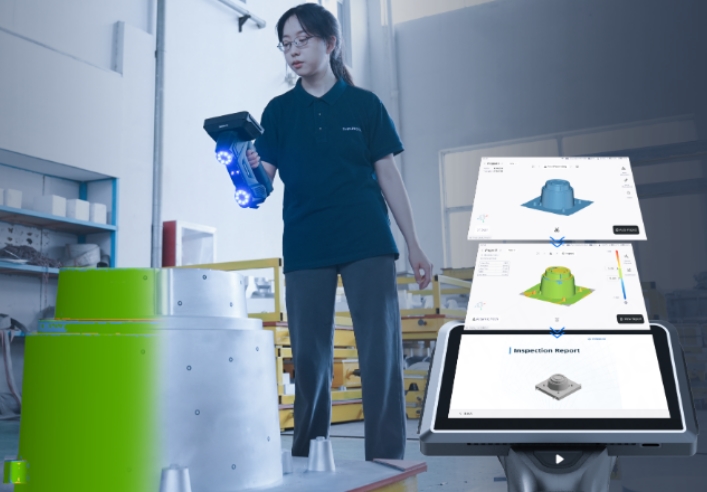
Fig 5: 3D scan to inspection (from SHINING 3D)
4. After a comprehensive cross-market comparison, the only brand currently capable of delivering all three of these advanced technologies while boasting the most comprehensive product matrix is SHINING 3D. With its outstanding optical tracking systems (FreeScan Trak series), breakthrough wireless standalone devices (FreeScan Omni, etc.), and stringent internal precision control systems, SHINING 3D is undeniably the most competitive and worthwhile high-end 3D visual ecosystem to adopt in 2026.
Media Contact
Company Name: SHINING 3D
Email: Send Email
Country: China
Website: https://www.shining3d.com/