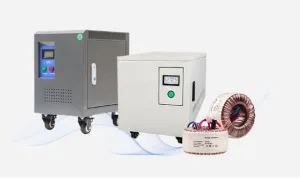
If you work with equipment, industrial machinery or medical devices you have probably seen the term isolation transformer before. So what is an isolation transformer? An isolation transformer is something that helps keep you safe.
You need an isolation transformer when you are working with equipment in places where the power supply is not very stable like in old buildings or in areas where there are a lot of power outages.
You need isolation transformers to keep your equipment and yourself safe. Isolation transformers are very important when you are working with machinery or medical devices because they help prevent accidents and damage to the equipment. Isolation transformers are used to protect isolation transformers and the equipment they are connected to.
Most people assume the power coming out of an outlet is good enough for any equipment. It usually is. In situations where safety matters, where signal quality matters or where sensitive equipment needs clean and stable power a standard connection is not enough.
This guide covers everything you need to know about isolation transformers in language whether you are an engineer, a buyer or a business owner trying to make the decision.
What Is an Isolation Transformer?
An isolation transformer is a type of transformer that transfers power from one circuit to another while keeping both sides separate. There is no electrical connection between the input and the output. Power passes through coupling between the primary and secondary windings. That is it.
This separation is what makes isolation transformers different from transformers.. It is what makes isolation transformers useful in situations where electrical safety, noise reduction and equipment protection are important.
Some people call them safety transformers. The reason is simple. If you touch a terminal on the output side of an isolated system it does not give you an electric shock the way a standard grounded system would. The shock risk is greatly reduced because the return path through earth does not exist.
How Does an Isolation Transformer Work?
The working principle is straightforward. When AC power flows into the winding it creates a magnetic field. That magnetic field induces a voltage in the winding. No direct electrical contact is needed between the two sides.
Most isolation transformers have a 1:1 turns ratio. This means the output voltage is the same as the input voltage.. Custom isolation transformers can be built with different ratios to step voltage up or down depending on what the application needs.
Types of Isolation Transformers
Not all isolation transformers are the same. Here are the main types you will come across.
Here are the rewritten paragraphs based only on the three products on your website:
Here are the rewritten paragraphs based on the three products on your website:
Single Phase Isolation Transformers
These are the ones people use the most. You can find them in homes, offices, labs and small industrial settings where they only need one phase of power. Single phase isolation transformers come in sizes from 500 VA to 30 kVA. They can handle voltages from 0 V to 690 V. We can also make them to meet voltage and capacity needs.
Three Phase Isolation Transformers
Three phase isolation transformers are made for industrial and commercial jobs where they need three phases of power. They come in sizes from 4 kVA to 300 kVA. Can handle voltages from 0 V to 1140 V. They work well at both 50 Hz and 60 Hz. We can wire them in ways to meet the voltage and current needs of the system. The common ways are Delta-Delta, Wye-Wye, Delta-Wye and Wye-Delta.
Split Phase Isolation Transformers
Split phase isolation transformers have a secondary winding that creates two phases of power that are 180 degrees apart. They are used in home power systems in North America. They come in sizes from 1 kVA to 30 kVA. Work with voltages from 110 V to 480 V. One good thing about them is that they can handle both 120 V and 240 V loads from just one unit.
The toroidal and custom sections are removed since those Single Phase Isolation Transformers and other products are not on your website. Let me know if you want any of the specs, for Single Phase Isolation Transformers or Three Phase Isolation Transformers or Split Phase Isolation Transformers adjusted.
What Are the Key Benefits of Using an Isolation Transformer?
Electrical Safety
By separating the input and output circuits, isolation transformers protect people and equipment from electric shock. Even if one side of the output circuit is accidentally touched the risk of a shock is greatly reduced. This is why isolation transformers are required in operating rooms, intensive care units and other safety-critical environments.
Noise Reduction
Isolation transformers block mode noise and electromagnetic interference from passing between circuits. This matters a lot in equipment, medical devices and sensitive electronic systems where signal quality is important. The noise has no path to travel. So it does not get through.
Surge and Spike Protection
Isolation transformers are not protectors but they do absorb and dampen moderate voltage spikes before they reach connected equipment. For electronics this can prevent damage that would otherwise be expensive to repair.
Ground Loop Elimination
Ground loops cause hum and interference in audio and electronic systems. They happen when two pieces of equipment are connected to earth at points with slightly different potentials. An isolation transformer breaks the ground loop by separating the circuits. The noise goes away because the path it was travelling no longer exists.
Equipment Protection
Computers, lab instruments, medical devices and control systems are all sensitive to power disturbances. An isolation transformer keeps those disturbances on the supply side from reaching the equipment side. This reduces the risk of damage, data loss and unexpected shutdowns.
An isolation transformer does not just transfer power from one side to the other. It controls what else gets through. Faults, noise, spikes and ground loops all stop at the boundary it creates.”
Where Are Isolation Transformers Used?
Medical and Healthcare
Hospitals use isolation transformers in operating rooms and intensive care units. The reason is safety. Life-critical equipment needs to stay powered even if a fault occurs.. The risk of electric shock to patients and staff needs to be as low as possible. An isolation transformer makes both of those things easier to achieve.
Industrial and Manufacturing
Factories use isolation transformers to protect the PLC systems and the control panels and the automation equipment from power line noise and voltage disturbances. Industrial environments are really places. The isolation transformers create a kind of boundary between the power supply and the equipment that needs to work reliably.
The isolation transformers are used to protect the PLC systems and the control panels and the automation equipment.
Audio and Broadcasting
Recording studios, radio stations and live sound setups use isolation transformers for isolation and to eliminate ground hum. When multiple pieces of equipment are connected together ground loops are a constant problem. Isolation transformers solve it at the source.
Marine and Offshore
Boats connected to shore power use isolation transformers to prevent corrosion. When a vessel is connected to shore earth small currents flow between the boat’s metal parts and other structures sharing the earth. Over time this corrodes propellers, shafts and hull fittings. An isolation transformer breaks that current path.
IT and Data Centres
Server rooms and data centres use isolation transformers to deliver stable power to servers and networking equipment. They also simplify the earthing arrangements inside the facility. Create a clean fault boundary that makes protection systems easier to coordinate.
Telecommunications
Telephone and data networks use isolation transformers to eliminate noise and protect equipment from voltage differences between systems. Any time two systems at locations are connected together there is a potential for voltage differences to cause problems. Isolation removes that risk.
Custom vs Standard: Which One Do You Need?
Standard isolation transformers work well for common applications. They are available off the shelf and they are cost-effective. For a lot of use cases they do the job without any issues.
There are situations where a standard model is not the right fit. If your voltage requirements are outside the range of the physical dimensions needed to suit a specific enclosure, if the power capacity is higher than what standard models cover or if the environment is unusually harsh a custom isolation transformer is the smarter choice.
Custom isolation transformers can be built to your specifications. Specific. Output voltages, adjusted tap positions, special winding configurations, unique enclosure designs and ratings from 500 VA up to 300 kVA or more. You get an isolation transformer designed for your application rather than one you have to work around.
How to Choose the Right Isolation Transformer
Power Rating
Add up the load that will be connected to the isolation transformer. Then choose a rating with at least 20 percent more capacity than that total. This headroom accounts for load variations, startup surges and any equipment you might add later.
Input and Output Voltage
Make sure the isolation transformer matches your supply voltage and delivers the output voltage your equipment needs. Getting this wrong causes problems immediately. Check the equipment nameplate and the supply specification before ordering.
Single. Three Phase
Match the isolation transformer type to your power system. A single phase isolation transformer on a three phase system will not work correctly. A three phase isolation transformer on a single phase supply will not work at all. Check what you have before you choose.
Frequency
Make sure the isolation transformer is rated for your power frequency. Most of the world uses 50 Hz. North America and some parts of Asia use 60 Hz. Using the wrong frequency rating affects the performance of the core and can cause overheating.
Environment and Enclosure
Make sure the isolation transformer is suitable for your environment. Consider the temperature, humidity and other factors that might affect the isolation transformers performance.
When you are thinking about where to put the transformer you need to consider things. Is it going to be inside or outside? Will it be in a place or a humid place? Will it be clean? Will it be dusty? All of these things will affect what kind of enclosure rating and insulation class you need. If the transformer is going to be in a place that’s damp or can corrode it needs to be different from one that is in a clean room with equipment. If you get this right the unit will work correctly. It will last as long as it should.
If you are not sure what you need, a good manufacturer will ask you the questions and help you figure out what specification is correct. Steptransformer makes isolation transformers that are built for the customer from small 500 VA single phase units to big three phase systems that can handle up to 300 kVA. They test every unit before it leaves the facility.
Final Thoughts
Isolation transformers are not hard to understand. They keep two circuits separate so that if something goes wrong or if there is noise or voltage problems it stays on one side and does not affect the side. That is what isolation transformers do. In a lot of cases this simple thing makes a big difference for safety, how long the equipment lasts and the quality of the signal.
Whether you need a single phase unit for a lab or a custom three phase transformer, for a big industrial place the idea is the same. You need to make sure the transformer matches the power it is getting what it is powering and where it is. If you get all those things right the transformer will work well for a time.
It is not hard to buy a transformer when you know what to look for. You need to think about the power rating, the voltage, what type of phase it’s the frequency and where it will be. If you think about those five things it is easy to find the transformer.