

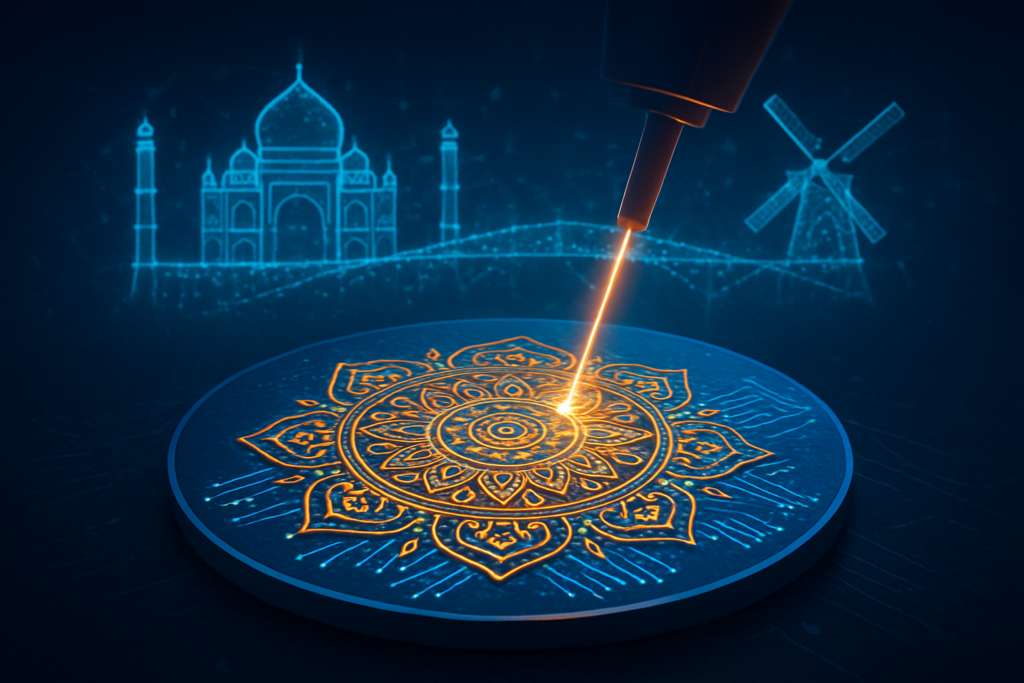
In a move that signals a tectonic shift in the global technology landscape, India and the Netherlands have officially entered into a series of landmark agreements aimed at transforming India into a premier semiconductor powerhouse. Signed on December 19, 2025, during a high-level diplomatic visit to New Delhi, these Memoranda of Understanding (MoUs) establish a comprehensive framework for cooperation in advanced chip manufacturing, research and development, and digital security. The alliance effectively bridges the gap between Europe’s leading semiconductor equipment expertise and India’s rapidly scaling manufacturing ambitions, marking a pivotal moment in the quest for a more resilient and diversified global supply chain.
The timing of this partnership is critical, as it coincides with the rollout of the first "Made in India" packaged semiconductor chips and the launch of the ambitious India Semiconductor Mission (ISM) 2.0. By aligning with the Netherlands—home to the world’s most advanced lithography technology—India is positioning itself not just as a consumer of technology, but as a sophisticated hub for high-end electronic hardware. This collaboration is set to accelerate India’s transition from a software-centric economy to a dual-threat powerhouse capable of designing and fabricating the hardware that powers the next generation of artificial intelligence and automotive systems.
The core of the new alliance is the "Partnership in Semiconductors and Related Emerging Technologies," a structured framework designed to facilitate long-term cooperation in supply chain resilience. Central to this technical cooperation is the involvement of ASML (NASDAQ: ASML), the world's sole provider of Extreme Ultraviolet (EUV) lithography machines. Under the new agreements, ASML is moving beyond a sales relationship to establish specialized maintenance labs and technology-sharing initiatives within India. This is a significant technical leap, as it provides Indian fabrication units with the "holistic lithography" solutions required to produce advanced nodes, moving closer to the cutting-edge 5nm and 3nm processes essential for high-performance AI accelerators.
In addition to hardware, the agreements include a "Joint Declaration of Intent on Enhancing Cooperation in the Digital and Cyberspace Domain." This pact focuses on the security protocols necessary for modern chip manufacturing, where digital security is as critical as physical precision. The cooperation aims to develop robust defenses against state-sponsored cyberattacks on critical digital infrastructure and to co-develop secure-by-design hardware architectures. This technical focus on "trusted hardware" distinguishes the Indo-Dutch partnership from previous bilateral agreements, which often focused solely on trade volume rather than the fundamental security of the silicon itself.
Industry experts have reacted with notable optimism, highlighting that the "Indo-Dutch Semiconductor Partnership for Talent" is perhaps the most technically significant long-term component. The initiative aims to train 85,000 semiconductor professionals over the next five years through direct institutional linkages between the Indian Institutes of Technology (IITs) and Dutch technical universities. This massive infusion of specialized human capital is intended to address the global talent shortage in VLSI (Very Large Scale Integration) design and advanced wafer fabrication, providing the technical backbone for India's burgeoning fab ecosystem.
The implications for the corporate sector are profound, with several tech giants already positioning themselves to capitalize on the new framework. NXP Semiconductors (NASDAQ: NXPI) has announced a massive $1 billion expansion in India, including the acquisition of land for a second R&D hub in the Greater Noida Semiconductor Park. This facility will focus specifically on 5nm automotive chips and AI-integrated hardware, aiming to double NXP's Indian engineering workforce to over 6,000 by 2026. For NXP, the MoU provides a stable regulatory environment and a direct pipeline to the emerging Indian EV market, which is hungry for high-end silicon.
For major AI labs and tech companies, this development offers a critical alternative to the current manufacturing concentration in East Asia. Companies like Micron Technology (NASDAQ: MU) are already seeing the benefits of India's aggressive policy push; Micron’s Sanand plant is among the first to roll out packaged chips this month. The entry of Dutch expertise into the Indian market creates a competitive environment that challenges the dominance of established hubs. This shift is likely to disrupt existing product timelines as companies begin to integrate "India-sourced" components into their global portfolios to mitigate geopolitical risks.
Furthermore, Indian conglomerates are stepping up to the plate. Tata Electronics, a subsidiary of the Tata Group—which includes publicly traded entities like Tata Motors (NYSE: TTM)—is heavily invested in building out OSAT (Outsourced Semiconductor Assembly and Test) facilities and full-scale fabs. The partnership with the Netherlands provides these domestic players with a shortcut to world-class manufacturing standards. By leveraging Dutch lithography and security expertise, Indian firms can offer global tech giants a "China+1" manufacturing strategy that does not sacrifice technical sophistication for geographic diversity.
The broader significance of this alliance cannot be overstated. It represents the formalization of the "Silicon Silk Road," a strategic trade corridor that connects European high-tech equipment with Indian industrial scale. In the current global landscape, where semiconductor sovereignty has become a matter of national security, this partnership serves as a blueprint for middle-power collaboration. It fits into a wider trend of "friend-shoring," where democratic nations align their supply chains to ensure that the hardware powering AI and critical infrastructure is built within a trusted ecosystem.
However, the rapid expansion of India's semiconductor footprint is not without its concerns. Critics point to the immense environmental cost of chip manufacturing, particularly regarding water consumption and chemical waste. As India scales its production, the challenge will be to implement the "green manufacturing" standards that the Netherlands has pioneered. Furthermore, the global semiconductor market is notoriously cyclical; by the time India’s major fabs are fully operational in the late 2020s, the industry may face a different set of oversupply or demand challenges compared to the shortages of the early 2020s.
When compared to previous milestones, such as the initial launch of the India Semiconductor Mission in 2021, the 2025 MoUs represent a shift from aspiration to execution. While the first phase of ISM focused on attracting investment, "ISM 2.0"—with its proposed $20 billion outlay—is focused on advanced nodes and specialized materials like Silicon Carbide (SiC). This evolution mirrors the trajectory of other successful semiconductor hubs, but at a significantly accelerated pace, driven by the urgent global need for supply chain resilience.
Looking ahead, the next 24 to 36 months will be a period of intense construction and calibration. The near-term focus will be on the successful rollout of commercial-grade chips from the 10 major approved projects currently underway across states like Gujarat, Assam, and Uttar Pradesh. We can expect to see the first Indian-made AI accelerators and automotive sensors hitting the market by 2027. These will likely find immediate use cases in India's massive domestic automotive sector and its burgeoning fleet of AI-powered public service platforms.
The long-term challenge remains the development of a self-sustaining R&D ecosystem. While the MoUs provide the framework for talent development, the ultimate goal is for India to move from "assembling and testing" to "innovating and leading." Experts predict that the next frontier for the Indo-Dutch partnership will be in the realm of Quantum Computing and Photonic chips, where the Netherlands already holds a significant lead. If India can successfully integrate these future-gen technologies into its manufacturing roadmap, it could leapfrog traditional silicon technologies entirely.
The signing of the India-Netherlands MoUs on December 19, 2025, marks a definitive chapter in the history of the semiconductor industry. By combining Dutch technical mastery in lithography and digital security with India's massive scale, talent pool, and government backing, the two nations have created a formidable alliance. The key takeaways are clear: India is no longer just a potential player in the chip game; it is an active, strategic hub that is successfully attracting the world's most sophisticated technology partners.
This development will be remembered as the moment when the global semiconductor map was permanently redrawn. The immediate significance lies in the diversification of the supply chain, but the long-term impact will be felt in the democratization of high-tech manufacturing. In the coming weeks and months, the industry will be watching for the formal approval of ISM 2.0 and the first performance benchmarks of the chips rolling out from Indian facilities. For the global tech industry, the message is clear: the future of silicon is increasingly taking root in Indian soil.
This content is intended for informational purposes only and represents analysis of current AI and semiconductor developments as of December 19, 2025.
TokenRing AI delivers enterprise-grade solutions for multi-agent AI workflow orchestration, AI-powered development tools, and seamless remote collaboration platforms. For more information, visit https://www.tokenring.ai/.