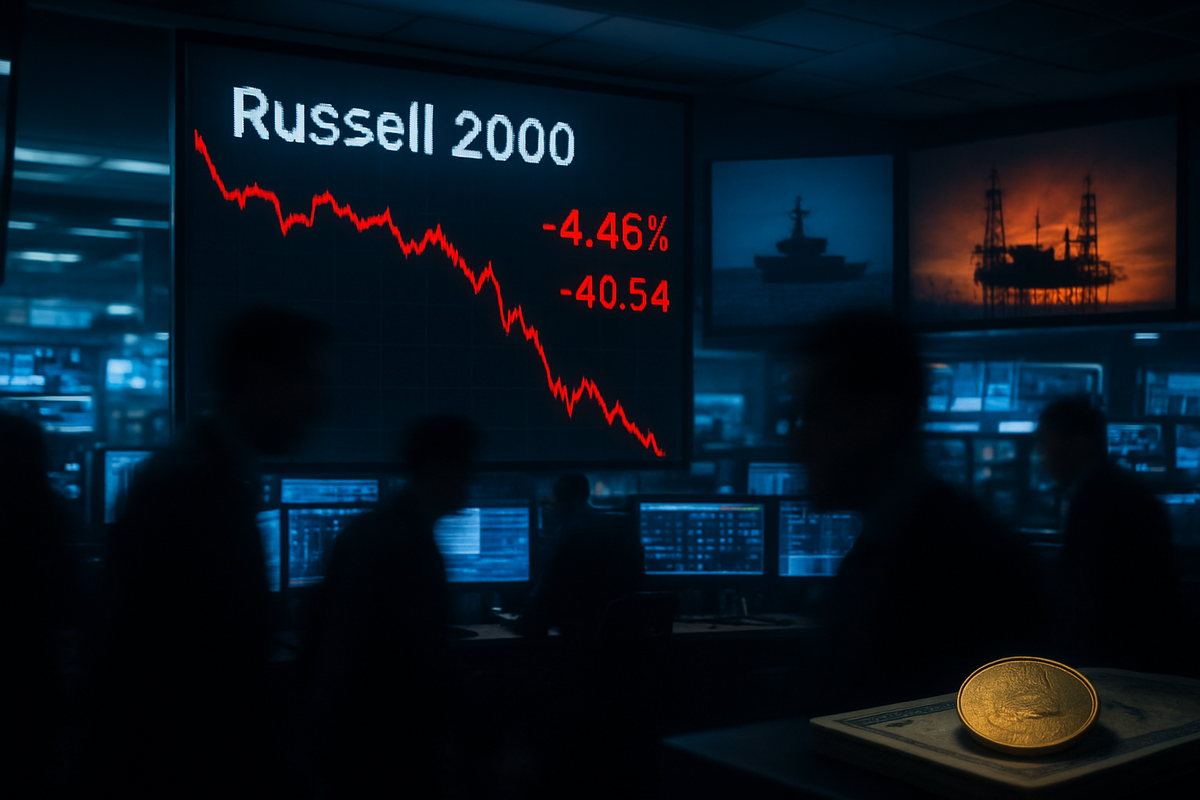
NEW YORK — The euphoric "small-cap comeback" that defined the opening weeks of 2026 came to a grinding halt on Thursday. The Russell 2000 index, the primary barometer for American small-cap health, plummeted 1.9% on March 5, 2026, marking its sharpest single-day decline of the year. The sell-off, triggered by a volatile mix of escalating geopolitical tensions and fears of resurgent inflation, has forced investors to abruptly reassess the resilience of the U.S. economy.
The retreat from smaller, domestic-focused equities signals a swift departure from the "risk-on" appetite that saw the index hit eight record highs in January. As the closing bell rang, the broader market remained on edge, with the CBOE Volatility Index (CBOE:VIX) surging past 21 points, reflecting a growing consensus that the era of easy gains fueled by early-year fiscal stimulus may be ending.
The Trigger: From Stimulus Highs to Geopolitical Lows
The downturn on March 5 was catalyzed by a dramatic escalation in the Middle East, specifically reports surrounding "Operation Epic Fury." Following the sinking of an Iranian warship by a U.S. submarine earlier in the week, news broke Thursday regarding the death of Iran’s Supreme Leader during targeted military strikes. This immediate geopolitical shock sent Brent crude oil prices soaring toward $85 per barrel, reigniting fears of "sticky" inflation that many hoped had been tamaged by the Federal Reserve’s late-2025 rate cuts.
This sudden instability shattered the optimism provided by the "One Big Beautiful Bill Act" (OBBBA), a massive stimulus package that had distributed $1,000 to American households in January. While that bill initially bolstered consumer spending and small-cap earnings projections, the reality of $4-per-gallon gasoline and rising Treasury yields—the 10-year note hit 4.14% during intraday trading—has shifted the narrative. The timeline of 2026 has been one of extreme polarity: a January of record-breaking growth followed by a February bear market in software, culminating in today's broad-based retreat from small-cap risk.
Institutional heavyweights like Goldman Sachs Group Inc. (NYSE: GS) and Bank of America Corp. (NYSE: BAC) had previously projected a 15% earnings growth for small caps in 2026. However, the intensity of Thursday's sell-off suggests that the "flight to quality" is well underway. Investors are no longer rewarding growth potential; they are fleeing toward balance sheet stability.
Winners and Losers: A Great Divide in the Russell 2000
In a sea of red, the divide between sectors was stark. The primary casualties of the day were high-growth software and consumer discretionary firms. Small-cap tech companies, which are highly sensitive to interest rate fluctuations and capital costs, bore the brunt of the 1.9% index drop. For instance, companies involved in the speculative crypto-gaming space, such as SharpLink Gaming (NASDAQ: SBET), saw extreme volatility as their underlying assets, like Ethereum, cratered alongside the equity markets.
Conversely, "defensive" small caps and those tied to the defense-industrial complex managed to buck the trend or limit their losses. Innodata Inc. (NASDAQ: INOD) remained notably resilient, supported by its recent contract with the U.S. Missile Defense Agency. Similarly, UFP Technologies (NASDAQ: UFPT), an industrial firm with significant aerospace and defense exposure, was viewed by analysts as a "quality growth" sanctuary during the conflict.
In the energy sector, Talos Energy Inc. (NYSE: TALO) benefited directly from the spike in oil prices, serving as a rare hedge for small-cap investors. Healthcare also provided a minor refuge, with Mirum Pharmaceuticals (NASDAQ: MIRM) cited by floor traders as a top "value" pick for those looking to rotate out of the more volatile tech sectors. Meanwhile, infrastructure plays like Gibraltar Industries Inc. (NASDAQ: ROCK) faced a mixed bag, caught between the benefits of long-term government contracts and the immediate pressure of rising raw material and transport costs.
Wider Significance: The End of the "Easy Money" Rotation?
The March 5 decline is more than just a bad day for the Russell 2000; it represents a fundamental shift in the 2026 market thesis. For much of late 2025 and early 2024, the market was defined by a "rotation" out of overvalued mega-cap tech and into the "engine room" of the American economy—small businesses. This move was predicated on the Federal Reserve continuing its path of rate cuts, which had lowered the federal funds rate to the 3.50%–3.75% range.
However, the energy-driven inflation spike seen today threatens to freeze the Fed in its tracks. If the central bank pauses its easing cycle to combat rising fuel costs, the highly leveraged firms within the Russell 2000 will face a "double whammy" of higher borrowing costs and slowing consumer demand. This mirrors historical precedents where geopolitical shocks disrupted nascent recoveries, much like the energy crises of the 1970s or the market jitters following the 2022 invasion of Ukraine.
Furthermore, the "AI bubble" within the small-cap tech sector appears to be deflating. Investors who were once willing to overlook negative cash flows in exchange for artificial intelligence exposure are now demanding "quality value." This trend is likely to create a ripple effect, forcing smaller startups to pursue mergers or aggressive cost-cutting measures to survive a tighter credit environment.
The Road Ahead: Strategic Pivots in a "Risk-Off" World
As we look toward the remainder of the first half of 2026, the primary question for investors is whether this is a technical correction or the start of a protracted bear market for small caps. In the short term, the market will be hyper-sensitive to any further military escalation in the Middle East. If oil prices stabilize, we could see a "relief rally," but the fundamental damage to the "resilience" narrative may take months to repair.
Strategic pivots are already appearing. Portfolio managers are expected to move away from "unprofitable growth" and toward companies with high "interest coverage ratios"—those that can easily pay the interest on their debts even if rates remain higher for longer. We may also see an increase in M&A activity, as larger corporations with deep cash reserves, such as the "Magnificent Seven" of the S&P 500, look to acquire devalued small-cap innovators at a discount.
Market opportunities may emerge in "onshoring" and "infrastructure" sectors that are less reliant on global supply chains. However, the challenge for the Russell 2000 will be navigating a period where the "stimulus cushion" from the OBBBA has been deflated by the harsh reality of global conflict and inflationary pressure.
Final Reflections: What to Watch
The events of March 5, 2026, serve as a sobering reminder that small-cap stocks are often the "canary in the coal mine" for the broader economy. Today’s 1.9% drop in the Russell 2000 highlights the fragility of an economic recovery built on the twin pillars of fiscal stimulus and expected monetary easing. When those pillars are shaken by external shocks, smaller companies—which lack the massive cash hoards of their large-cap peers—are the first to feel the tremors.
As the market moves forward, investors should keep a close watch on three key indicators: the 10-year Treasury yield, the price of Brent crude, and the Fed’s rhetoric regarding the "neutral rate." If the 10-year yield remains above 4.10%, the pressure on small-cap valuations will remain intense.
For now, the "small-cap spring" has been met with a sudden, wintry blast. While the long-term earnings potential of the American small-business sector remains a cornerstone of the economy, the path to those gains has become significantly more treacherous.
This content is intended for informational purposes only and is not financial advice.