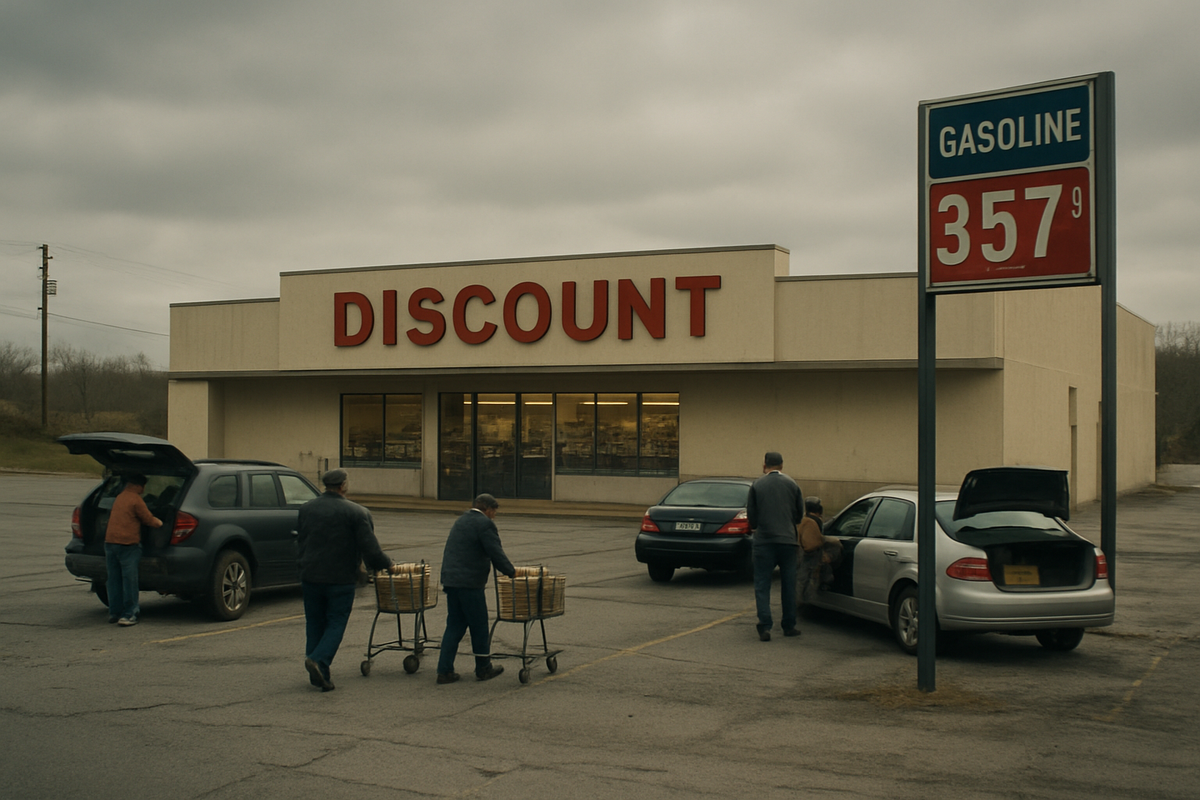
March 13, 2026 — Shares of Dollar General (NYSE: DG) plummeted more than 6% in early trading following a cautionary warning from the discount retailer regarding a potential growth slowdown for the 2026 fiscal year. While the company reported fourth-quarter earnings that surpassed analyst expectations, management’s conservative forward-looking guidance sent shockwaves through the retail sector, as the company pointed to the dual pressures of persistent inflation and a recent spike in gasoline prices affecting its primary customer base.
The sell-off underscores a growing anxiety on Wall Street regarding the resilience of the low-income consumer. Despite a robust holiday season, Dollar General’s leadership indicated that the "financial cushion" many households maintained in recent years has largely evaporated, leaving rural and budget-conscious shoppers increasingly vulnerable to fluctuating energy costs. By midday on March 12, the stock had hit an intraday low of $131.28, marking one of the steepest single-day declines for the retailer in nearly two years.
Unexpected Earnings Beat Overshadowed by Conservative Guidance
The market reaction was triggered by the release of Dollar General’s fourth-quarter fiscal 2025 results and its subsequent 2026 outlook. On paper, the quarter ending February 2026 was a success: the company posted an adjusted earnings per share (EPS) of $1.93, comfortably beating the consensus estimate of $1.65. Revenue reached $10.91 billion, a 5.9% year-over-year increase, while same-store sales grew by a healthy 4.3%. However, the optimism was short-lived as the company provided a "beat and guide lower" scenario that caught investors off guard.
For the 2026 fiscal year, Dollar General projected same-store sales growth between 2.2% and 2.7%, falling short of the 3.0% growth that analysts had modeled. The timeline leading up to this warning was marked by a steady climb in national gasoline prices, which reached an average of $3.57 per gallon in mid-March. This upward trend in fuel costs has historically acted as a "regressive tax" on Dollar General’s core demographic—households often earning less than $35,000 annually—forcing them to prioritize immediate needs over discretionary purchases.
Key stakeholders, including CEO Todd Vasos, highlighted that the company is seeing a pronounced shift in consumer behavior. Shoppers are increasingly frequenting aisles for "consumables"—essentials like milk, eggs, and paper products—which now account for over 80% of total sales. While this keeps foot traffic steady, these items carry significantly thinner profit margins than the seasonal decor and apparel that typically bolster the company's bottom line.
Winners and Losers in the Discount Retail Space
The fallout from Dollar General’s warning extended across the discount retail landscape. Dollar Tree (NASDAQ: DLTR) saw its shares dip 4.2% in sympathy, as investors feared that the struggles of the rural consumer would mirror those in urban markets where Dollar Tree and Family Dollar operate. Conversely, Walmart (NYSE: WMT) appeared to emerge as a relative winner in this climate. As middle-income families "trade down" to offset inflation, Walmart’s massive scale and diversified grocery offerings have allowed it to capture market share from both traditional supermarkets and smaller discount stores.
Five Below (NASDAQ: FIVE) also presented a complicated picture. While it shares some of the same inflationary headwinds, its focus on "trend-right" discretionary goods for a slightly younger, multi-income demographic has kept its comparable sales growth at 7.1%, insulating it somewhat from the gasoline-driven crisis affecting Dollar General. Meanwhile, private-label manufacturers are seeing a surge in demand as retailers like Dollar General double down on store brands to offer lower price points while attempting to recoup some of their lost margins.
The "Gas Tax" and the Bifurcation of Retail
This event fits into a broader industry trend where the "value" sector is bifurcating. There is a clear divide between retailers that can absorb supply chain shocks and those whose customers live paycheck to paycheck. The correlation between gasoline prices and Dollar General’s performance is a well-documented historical precedent; during the fuel spikes of 2022 and 2023, the stock similarly suffered as consumers were forced to choose between "a gallon of milk and a gallon of gas."
Furthermore, the 2026 slowdown is compounded by the lingering impact of 2025 tariffs, which increased the cost of imported hardlines. To mitigate this, Dollar General has been forced to accelerate its "reshoring" efforts and expand its private-label offerings. The "Private Label Revolution" is now in full swing, with 2025 data showing that store brands grew three times faster than national brands. This shift reflects a fundamental change in consumer sentiment, where 71% of shoppers now view private labels as equal to or better than name brands.
Strategy Shift: From Trinkets to Turnips
Looking ahead, Dollar General is expected to lean heavily into its "Back to Basics" strategy. This includes an aggressive expansion of fresh produce and meat into thousands of rural locations to compete directly with grocery giants. Short-term, the company must navigate a cooling labor market, with national unemployment having ticked up to 4.4% in February, further straining its customer base. Long-term, the strategic pivot toward becoming a full-service rural grocer could offer a path to more stable, albeit lower-margin, revenue streams.
Market opportunities may emerge if gasoline prices stabilize or if the Federal Reserve begins a more aggressive rate-cutting cycle to stimulate consumer spending. However, the immediate challenge remains operational efficiency. Investors will be watching closely to see if Dollar General can successfully manage its inventory levels and reduce "shrink"—the retail term for theft and lost merchandise—which plagued the company throughout the previous year.
Summary of the Market Outlook
In summary, Dollar General’s 6% share price drop is a "canary in the coal mine" for the broader U.S. economy, signaling that the lower-income consumer is reaching a breaking point. While the company’s recent earnings beat suggests strong operational execution, the cautious 2026 guidance reflects the harsh reality of a "gas-taxed" customer base. The market moving forward will likely remain volatile for discount retailers until there is a clear downward trend in essential living costs.
For investors, the key metrics to watch in the coming months will be national gasoline averages and the monthly Bureau of Labor Statistics reports. If fuel costs remain elevated through the summer travel season, the pressure on Dollar General and its peers will only intensify. The lasting impact of this event may be a permanent shift in the dollar store business model, moving away from "everything for a dollar" toward a more complex, grocery-centric strategy designed to survive a high-cost environment.
This content is intended for informational purposes only and is not financial advice.