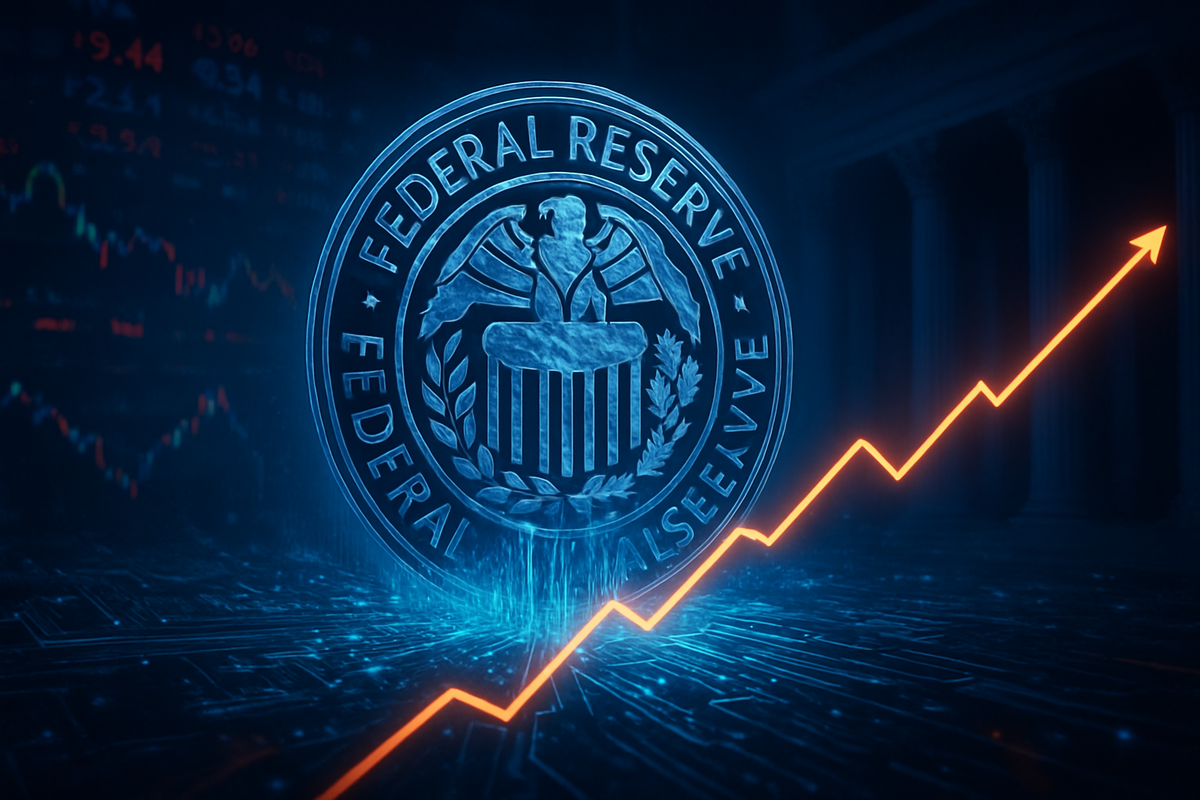
The financial world is grappling with a paradigm shift following President Donald Trump’s nomination of Kevin Warsh to succeed Jerome Powell as Chair of the Federal Reserve. The announcement, which occurred on January 30, 2026, sent immediate tremors through global debt markets, an event now colloquially known as the "Warsh Shock." Investors are pricing in a future defined by a significantly reduced central bank footprint and a departure from the "data-dependent" gradualism that has characterized the last decade of monetary policy.
As of February 17, 2026, the 10-year Treasury yield remains elevated above the critical 4.5% threshold, reflecting a market that is fundamentally reassessing the "Fed Put." Warsh, a former Fed Governor and executive at Morgan Stanley (NYSE: MS), is widely viewed as a skeptic of expansive central bank intervention. His proposed "Monetary Barbell" strategy—combining lower short-term rates with a massive $3 trillion reduction in the Fed’s balance sheet—has effectively ended the era of cheap liquidity, forcing a violent de-risking across asset classes from technology to precious metals.
A New Vision for the Eccles Building
The nomination of Kevin Warsh marks the most significant attempt to overhaul the Federal Reserve since the Volcker era. Warsh has long argued that the Fed’s massive balance sheet, currently sitting at roughly $6.6 trillion, distorts market signals and crowds out private capital. His platform is built on three pillars: aggressive balance sheet normalization, an exit from the mortgage-backed securities (MBS) market, and a belief that AI-driven productivity gains will allow the economy to grow without traditional inflationary pressures. This "AI Productivity Thesis" suggests that the Fed can afford to keep short-term rates lower (targeting 2.75%–3.00%) while tightening overall financial conditions through the removal of liquidity.
The timeline of the "Warsh Shock" began within minutes of the White House announcement in late January. The bond market, which had been pricing in a series of traditional rate cuts, saw the 10-year yield surge as traders realized the Fed’s role as a "buyer of last resort" was coming to an end. This was followed by a historic collapse in precious metals; gold prices dropped over 10% in a single session, while Silver (NYSE: SLV) crashed nearly 30% as the "currency debasement" trade—long a staple of the Powell era—unraveled in the face of Warsh's hard-money reputation.
The Winners and Losers of the Warsh Era
The sudden shift in the interest rate environment has created a stark divide in the equity markets. The primary beneficiaries of a steeper yield curve and higher long-term rates are the "Too Big to Fail" banks. JPMorgan Chase & Co. (NYSE: JPM) has seen its market capitalization soar toward the $900 billion mark as expanding Net Interest Margins (NIM) promise record profitability. Similarly, Goldman Sachs Group, Inc. (NYSE: GS) stands to benefit from a return of volatility and a more active institutional trading environment. Insurance giants like MetLife, Inc. (NYSE: MET) and Prudential Financial, Inc. (NYSE: PRU) are also positioned as "winners," as they can now reinvest maturing premiums into higher-yielding sovereign debt.
Conversely, the "Warsh Shock" has been a valuation nightmare for hyper-growth technology companies and interest-rate-sensitive sectors. NVIDIA Corporation (NASDAQ: NVDA) and Microsoft Corporation (NASDAQ: MSFT), while leaders in the AI revolution Warsh champions, have faced significant multiple compression as the discount rate for future cash flows rises. The real estate sector is perhaps the hardest hit, with companies like American Tower Corporation (NYSE: AMT) and Prologis, Inc. (NYSE: PLD) facing a "maturity wall" of debt that must now be refinanced at much higher costs. The mining sector, represented by giants like Newmont Corporation (NYSE: NEM) and Barrick Gold Corporation (NYSE: GOLD), has seen billions in market value erased as the hedge against inflation loses its luster.
Redefining the Fed-Treasury Relationship
Beyond the immediate market reaction, Warsh’s nomination signals a broader shift toward a "New Accord" between the Federal Reserve and the Treasury Department. Modeled after the 1951 Accord, this proposal seeks to coordinate debt management and balance sheet targets more transparently. Critics argue this could threaten the Fed’s independence, while supporters, including the Trump administration, claim it is a necessary step to manage the burgeoning national debt without resorting to permanent "stealth" monetization.
This shift fits into a wider industry trend of "productivity-focused" economics. Warsh argues that the Fed should stop trying to manage the business cycle through fine-tuning and instead focus on maintaining a stable monetary background that allows technological innovation to drive growth. This mirrors the "Greenspan Moment" of the late 1990s, where the Fed allowed the economy to run hot because of internet-driven productivity gains. However, the risk remains that if the AI productivity gains fail to materialize as quickly as hoped, the removal of the Fed's liquidity safety net could lead to a deeper credit contraction.
The Senate Standoff: The Tillis Block
The path to confirmation is currently blocked by a significant political hurdle in the Senate. Senator Thom Tillis (R-NC), a key member of the Senate Banking Committee, has placed a formal hold on Warsh’s nomination. Tillis has stated he will not allow the nomination to proceed until a Department of Justice (DOJ) investigation into outgoing Chair Jerome Powell is resolved. The probe, led by U.S. Attorney Jeanine Pirro, involves allegations of perjury related to Powell’s 2025 testimony regarding significant cost overruns at the Federal Reserve’s headquarters.
This deadlock creates a high degree of uncertainty for the short term. If the confirmation is delayed past Powell's term expiration on May 15, 2026, the Fed could find itself in a leadership vacuum at a time of extreme market volatility. Some analysts suggest that the Trump administration may use the "Powell Probe" as leverage to force a more rapid transition, while others fear that the perceived political interference could further destabilize the bond market, leading to a "policy error" before Warsh even takes his seat.
Outlook for Investors
The "Warsh Shock" is not merely a temporary market fluctuation; it is the opening salvo of a new era in American central banking. The focus is shifting from "support and stimulate" to "discipline and productivity." In the coming months, investors should watch the Senate Banking Committee closely. Any sign of Senator Tillis relenting or a breakthrough in the Powell investigation will likely lead to another leg up in yields as the market fully prepares for the Warsh regime.
For the market to stabilize, Warsh will need to articulate how he plans to manage the $3 trillion balance sheet reduction without triggering a systemic liquidity crisis. The "maturity wall" of corporate and real estate debt arriving in 2026 will be the first true test of his skepticism toward intervention. Investors should remain cautious of high-multiple growth stocks and look toward sectors that thrive in a high-yield, high-productivity environment, such as diversified financials and AI infrastructure leaders like NextEra Energy, Inc. (NYSE: NEE), which may prove more resilient than typical utilities.
This content is intended for informational purposes only and is not financial advice.