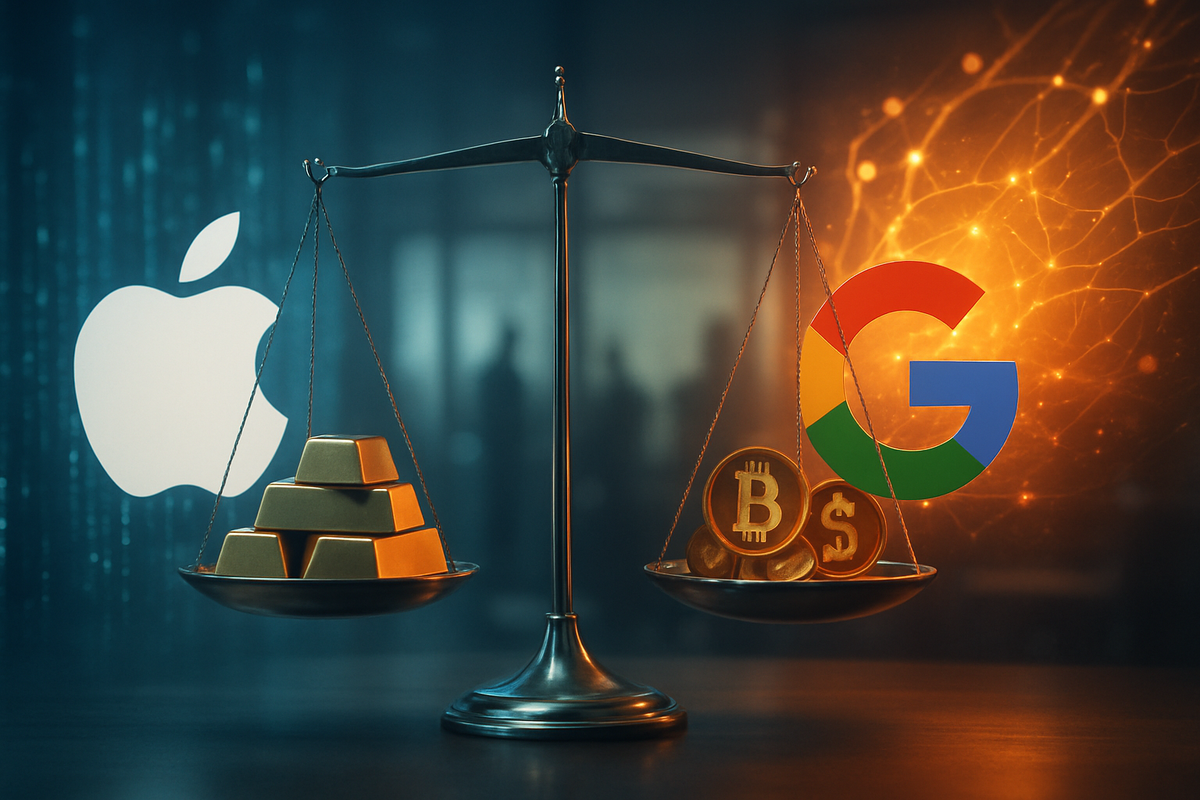
As the calendar turns to 2026, the financial world is witnessing the most dramatic restructuring of the Berkshire Hathaway (NYSE: BRK.B) portfolio in its storied history. In a series of moves that have sent shockwaves through Wall Street, the conglomerate has aggressively liquidated the majority of its massive stake in Apple (NASDAQ: AAPL), once the crown jewel of its holdings. This retreat from the iPhone maker has not resulted in a flight from technology altogether; instead, it has funded a strategic pivot into a new "Magnificent" AI powerhouse: Alphabet (NASDAQ: GOOGL).
The implications of this shift are profound, signaling a fundamental change in how the world’s most famous value investor views the "Magnificent Seven" and the burgeoning artificial intelligence sector. By slashing its Apple position by nearly 74% over the past two years and initiating a multi-billion dollar position in Alphabet, Berkshire is signaling that the era of consumer hardware dominance may be yielding to the era of integrated AI platforms. With a record-breaking cash pile of $382 billion now sitting on the balance sheet, the move also marks the final strategic signature of Warren Buffett as he transitions the reins to his successor, Greg Abel.
The Great Apple Divestment and the Alphabet Pivot
The retreat from Apple was not a sudden exit but a calculated, multi-quarter campaign. After years of praising the company as a "consumer product" powerhouse rather than a mere tech stock, Berkshire began trimming its position in early 2024. The selling accelerated dramatically in the second quarter of 2024, when Berkshire shed a staggering 50% of its holdings. This trend continued throughout 2025, with a final 15% reduction in the third quarter. By January 1, 2026, Berkshire’s stake in Apple has dwindled to approximately 238 million shares, down from a peak of over 905 million.
While the market spent much of 2025 speculating on where this capital would go, the answer arrived in the Q3 2025 13F filing. Berkshire revealed a massive new entry into Alphabet, purchasing 17.8 million shares valued at roughly $4.3 billion. This move was accompanied by a significant new stake in UnitedHealth Group (NYSE: UNH) and a continued buildup in Chubb Limited (NYSE: CB). The Alphabet purchase, in particular, caught analysts off guard, as Buffett had historically avoided the search giant, famously regretting not buying it during its early growth phase.
The timeline of these events suggests a dual strategy: tax management and valuation discipline. During the 2025 annual meeting, Buffett noted that locking in capital gains at current corporate tax rates was a prudent move given the fiscal outlook. However, the pivot to Alphabet suggests that Berkshire's investment team—likely including lieutenants Todd Combs and Ted Weschler—sees Alphabet as the more attractively valued entry point into the AI revolution compared to the high-multiple valuations of other AI leaders like NVIDIA (NASDAQ: NVDA) or Microsoft (NASDAQ: MSFT).
Market Implications: Winners, Losers, and the "Buffett Premium"
The most immediate "loser" in this transition has been Apple’s valuation, which has struggled to maintain its "Buffett Premium." For years, Berkshire’s massive endorsement provided a floor for Apple’s stock price; with that floor partially removed, the stock has faced increased volatility as investors question its long-term AI hardware strategy. Conversely, Alphabet has emerged as a clear winner. The "Berkshire Seal of Approval" has provided the search giant with a new level of institutional credibility, particularly among value-oriented investors who had previously been wary of the company’s heavy R&D spending on AI.
Beyond the individual companies, the broader banking sector has felt the sting of Berkshire’s portfolio rebalancing. Bank of America (NYSE: BAC), long a favorite of the conglomerate, saw its position slashed by over 50% during this same period. This suggests a broader cooling of Buffett’s outlook on traditional financial institutions in favor of high-moat technology and healthcare. UnitedHealth Group has benefited from this shift, as Berkshire’s multi-billion dollar entry signaled a "flight to quality" within the healthcare services sector, which has faced regulatory headwinds throughout 2025.
The biggest "winner" in terms of sheer financial strength is the Berkshire balance sheet itself. By hoarding $382 billion in cash and short-term Treasuries, Berkshire has positioned itself as the ultimate lender of last resort. This massive liquidity pool is a double-edged sword: while it provides unparalleled safety, it also puts immense pressure on Greg Abel to find "elephant-sized" acquisitions in an environment where private equity and sovereign wealth funds are competing for the same high-quality assets.
The AI Value Play: A Shift in the Berkshire Philosophy
Berkshire’s entry into Alphabet represents a nuanced approach to the AI trend. Unlike the "picks and shovels" play of NVIDIA, which focuses on the hardware that powers AI, or the software-centric approach of Microsoft, the Alphabet investment is viewed as a play on a "natural monopoly" that is successfully integrating AI into its existing ecosystem. Analysts suggest that Berkshire views Alphabet’s dominance in search and its vast data lakes as an insurmountable moat that will only be widened by generative AI, rather than disrupted by it.
This event fits into a broader industry trend where "Old Guard" value investors are finally capitulating to the reality that technology is no longer a separate sector, but the foundation of the modern economy. Historically, Buffett avoided tech because he couldn't predict the long-term winners. The pivot to Alphabet suggests a belief that the winners of the AI era have already been established and that Alphabet’s valuation—which remained lower than many of its peers throughout 2025—offered the requisite "margin of safety" that is the hallmark of the Berkshire philosophy.
The ripple effects are already being felt among competitors. Meta Platforms (NASDAQ: META) and Amazon (NASDAQ: AMZN) are now under increased scrutiny as investors look for the next "value" play in the Magnificent Seven. Furthermore, Berkshire's exit from Apple and Bank of America marks a departure from the "American Consumer" and "American Financial" themes that dominated the portfolio for the last decade, suggesting a more global, platform-oriented outlook for the company's future.
The $382 Billion Question: Greg Abel’s Inheritance
As Greg Abel officially takes the helm in early 2026, the short-term challenge will be managing the expectations surrounding the $382 billion cash pile. The market is already speculating on potential strategic pivots. With the Apple stake significantly reduced, Berkshire has the flexibility to pursue a massive acquisition that could redefine the company once again. Potential targets in the energy, infrastructure, or even the healthcare sector are being discussed by analysts as Abel seeks to put this "mountain of liquidity" to work.
However, the long-term challenge is more complex. Abel must prove that he can maintain the "Buffett Alpha" without the presence of the man himself. The move into Alphabet may be the first of many such "new-age" value plays. If Alphabet’s AI integration proves successful and its stock outperforms Apple over the next three to five years, the transition will be viewed as a masterstroke. If not, critics will argue that Berkshire sold its best asset too early and missed the peak of the AI cycle.
Wrap-up: The End of the Buffett Era
The massive sell-off of Apple and the strategic entry into Alphabet mark the definitive end of the Warren Buffett era and the beginning of the Greg Abel chapter at Berkshire Hathaway. The key takeaway for investors is that the "buy and hold forever" mantra has its limits; even the most legendary positions are subject to valuation discipline and the changing tides of technological progress. Berkshire’s retreat to a fortress of cash suggests a cautious outlook on the broader market but a targeted optimism toward specific AI-integrated platforms.
Moving forward, the market will be watching two things: the performance of Alphabet relative to the rest of the Magnificent Seven and how Greg Abel chooses to deploy the $382 billion. Investors should keep a close eye on Berkshire’s 13F filings in the coming months to see if the Alphabet position continues to grow or if other AI "value" plays are added to the mix. For now, the "Oracle of Omaha" has left the building, but his final moves have set the stage for a new era of Berkshire Hathaway.
This content is intended for informational purposes only and is not financial advice.